Entrepreneur's Guide 2026 Edition

Start Your Own VPN Business

The global VPN market is racing toward $90 billion by 2027. This guide shows you how to claim your share — from choosing a business model and building a brand to acquiring your first 1,000 customers, all without writing a single line of code.

$90B+ Market by 2027
15% Annual Growth
$0 Cost to Start
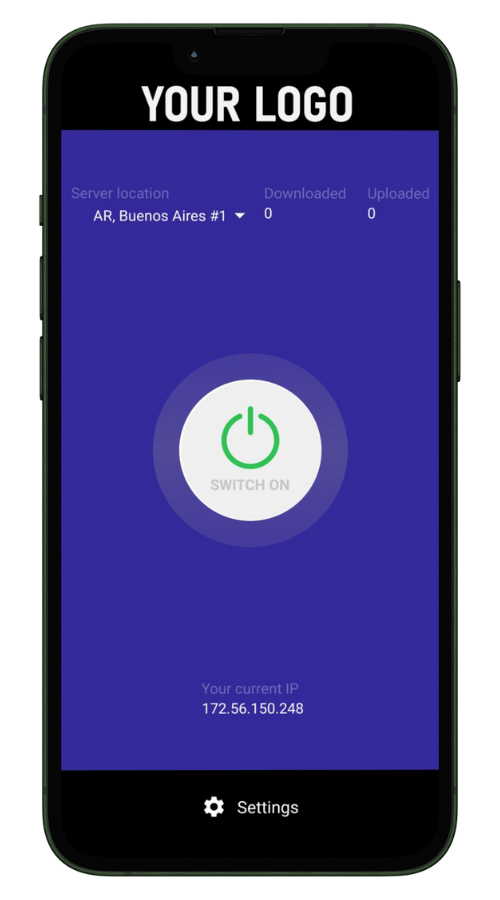
Start a VPN business — branded VPN service across all platforms

The VPN Market Opportunity

Virtual Private Networks have evolved from a niche IT tool to a mainstream consumer product. With over 1.6 billion VPN users worldwide, the market is projected to surpass $90 billion by 2027 — growing at roughly 15% every single year. This is not a passing trend. The forces driving VPN adoption are structural and accelerating.

Privacy concerns grow as data breaches make headlines weekly. Remote and hybrid work arrangements have become permanent for hundreds of millions of employees. Streaming services geo-restrict content, creating demand for location-switching tools. Governments in dozens of countries impose internet censorship, pushing citizens toward VPN solutions. And corporations increasingly mandate VPN usage for employees accessing company resources from home.

For entrepreneurs, the VPN industry offers something rare: a high-growth, high-margin, subscription-based business model that can be launched with minimal capital. This guide covers everything you need to know about starting a VPN business — whether you want a passive side hustle or a full-scale company.

Why Start a VPN Business?

Five powerful macro trends are pushing VPN demand higher every year — creating a sustained opportunity for new entrants.

🔒

Privacy Concerns

Data breaches expose billions of records annually. Consumers and businesses are increasingly aware that their internet activity is tracked, monitored, and monetized. VPN usage has shifted from "nice to have" to "essential" for privacy-conscious users — and that segment grows every year.

🏠

Remote Work Revolution

Over 35% of the global workforce now works remotely at least part-time. Companies require employees to use VPNs when accessing corporate networks from home, coffee shops, or co-working spaces. This creates massive B2B and B2C demand that did not exist at this scale five years ago.

🎥

Streaming & Content Access

Millions of users need VPNs to access geo-restricted streaming content, sports broadcasts, and region-locked websites. As streaming platforms expand globally with different content libraries per country, VPN demand for content access continues to surge.

🌐

Internet Censorship

Governments in over 70 countries restrict internet access to varying degrees. Citizens in these regions rely on VPNs to access uncensored information, social media platforms, and communication tools. This creates a market driven by genuine need, not just convenience.

🏢

Corporate Security

Businesses of all sizes use VPNs to encrypt employee communications, protect sensitive data, and secure connections to cloud services. SMBs that cannot afford enterprise security solutions often turn to consumer-grade VPNs — a perfect target for resellers.

📈

Recurring Revenue Model

Unlike e-commerce or freelancing, VPN subscriptions generate predictable monthly recurring revenue. Every new customer adds to your MRR, and subscribers tend to stay for months or years. This compounding growth model is the gold standard for online businesses.

VPN Business Models Compared

There are three ways to enter the VPN market. Each has dramatically different requirements, risks, and potential returns.

Factor Build From Scratch Affiliate Marketing White Label Reselling
Startup Cost $50,000 — $200,000+ $0 $0
Monthly Overhead $5,000 — $20,000+ $0 $0 platform fee
Time to Launch 6 — 18 months 1 day 5 minutes
Brand Control Full None — you promote their brand Full — your brand everywhere
Pricing Control Full None — they set prices Full — you set retail prices
Customer Ownership You own the relationship They own the customer You own the relationship
Revenue Share 100% 20 — 40% commission only 100% of margin
Technical Skills Needed Extensive — dev team required None None
Business Asset Value High — sellable business Low — no brand equity High — brand + subscriber base
Risk Level Very High Very Low Zero

The verdict: White label VPN reselling offers the best of both worlds — the brand control and customer ownership of building from scratch, combined with the zero-risk, zero-cost entry point of affiliate marketing. It is the optimal business model for most entrepreneurs entering the VPN market.

The Economics of VPN Reselling

Understanding the numbers behind a VPN reseller business — wholesale costs, retail pricing, margins, and revenue projections.

How the Money Works

As a VPN reseller, you buy VPN access at wholesale rates and sell at retail prices you control. The difference is your profit. There are no platform fees, no revenue sharing, and no hidden costs. Payments go directly to your Stripe account.

Here is a realistic financial model based on typical reseller pricing:

Retail Price (You Charge) $9.99/mo
Wholesale Cost (You Pay) $6/mo
Profit Per Customer $7.49/mo

Revenue at Scale

VPN revenue compounds because every subscriber pays every month. Here is what growth looks like over the first year:

Month 3 — 50 subscribers $374/mo
Month 6 — 150 subscribers $1,123/mo
Month 9 — 300 subscribers $2,247/mo
Month 12 — 500 subscribers $3,745/mo
Year 1 Total Revenue $22,470+

The power of recurring revenue: Unlike businesses where you start from zero each month, VPN subscriptions carry forward. Month 6 revenue includes all subscribers from months 1-5 who are still active, plus new signups. This compounding effect means your income grows faster than your acquisition rate.

Building Your VPN Brand

Your brand is the single most important differentiator in a competitive market. A strong brand commands higher prices, builds loyalty, and turns customers into advocates. Here is how to build one.

Choosing Your Brand Name

Your VPN brand name should be memorable, easy to spell, and convey trust or security. A few naming strategies:

  • Descriptive names — Names that hint at what the product does: ShieldVPN, VaultConnect, SafeRoute. Clear and immediately understood.
  • Abstract names — Unique, invented words that become associated with your service: Aviro, Kryptel, Tunnix. Harder to trademark-conflict but require more brand building.
  • Compound names — Combining two concepts: IronLock, CloudGuard, NetShield. Balances clarity with uniqueness.

Check domain availability before falling in love with a name. A matching .com domain is ideal, but .net, .io, or country-specific TLDs work well too. Verify the name is not trademarked in your target markets.

Positioning Your VPN Brand

You cannot be everything to everyone. The most successful VPN brands target a specific audience with a focused message. Consider these positioning strategies:

  • Privacy-first VPN — Target security-conscious users, digital nomads, journalists. Emphasize zero-log policies, encryption, and anonymity.
  • Streaming VPN — Target entertainment enthusiasts who want to access geo-restricted content on Netflix, Disney+, and sports platforms.
  • Business VPN — Target SMBs, remote teams, and freelancers who need secure connections for work. Emphasize reliability and team features.
  • Regional VPN — Target a specific country or language group with localized branding, support, and marketing.
  • Gaming VPN — Target gamers who want lower latency, DDoS protection, and access to region-locked game servers.

Visual Identity

Create a professional visual identity that builds trust:

  • Logo — Clean, simple, and readable at small sizes. Security/shield motifs work well for VPN brands. Hire a designer on Fiverr ($20-100) or use Canva for a clean logo.
  • Color palette — Blues and greens convey trust and security. Dark themes suggest sophistication. Choose 2-3 colors maximum and use them consistently.
  • Typography — Use professional, modern sans-serif fonts. Avoid decorative or playful fonts — VPN customers want to feel safe, not entertained.

Setting Up Your VPN Business with ResellPortal

Five steps to go from zero to a live VPN business — everything you need in under 15 minutes total.

1

Create Your Free Reseller Account

Sign up at ResellPortal — no credit card required, no approval process, no trial expiration. Your account is free forever, and you only pay wholesale costs when customers make purchases.

2

Configure Your Brand

Upload your logo, set your brand name and color scheme, and optionally connect a custom domain. Every customer-facing element — apps, portal, emails, checkout — will carry your brand identity. The underlying platform is invisible.

3

Set Your Retail Pricing

Choose your subscription prices and plan structure. Most resellers offer monthly plans ($7-12) and discounted annual plans ($3-6/mo). You have complete control — change prices anytime. See our pricing page for wholesale rates and margin calculations.

4

Connect Your Stripe Account

Link your Stripe account so customer payments deposit directly into your bank account. You receive money from customers — not from ResellPortal. Full financial control, instant payouts, and complete transparency.

5

Launch and Start Selling

Your branded VPN storefront is now live. Share your storefront URL, embed payment links on your website, or promote via social media. When customers subscribe, their VPN account is provisioned automatically — zero manual work required.

Marketing Your VPN Business

Your VPN business is live — now you need customers. Here are six proven strategies, ordered from lowest cost to highest cost, that work for VPN resellers at every stage.

1. Content Marketing & SEO

Create a blog on your VPN website and publish articles targeting keywords your potential customers search for. Examples: "how to protect your privacy online," "best VPN for Netflix," "is public Wi-Fi safe?" These articles attract organic search traffic from people actively interested in VPN solutions. Start with one article per week and build a library of 20-30 posts within your first few months.

SEO is a long-term play — results take 2-4 months — but it delivers the highest-quality traffic at the lowest ongoing cost. Every article you publish continues working for months or years after publication.

2. Community Engagement

Join online communities where your target audience congregates: Reddit (r/privacy, r/VPN, r/cybersecurity), privacy-focused forums, tech Discord servers, and relevant Facebook groups. Contribute genuine value — answer questions, share insights, participate in discussions. Build credibility before mentioning your VPN product. Hard selling in communities backfires; earning trust through expertise converts.

3. Social Media Presence

Build branded profiles on Twitter/X, YouTube, and LinkedIn. Share privacy tips, internet security news, VPN tutorials, and industry commentary. Video content on YouTube — even simple screen-recorded VPN tutorials — can generate substantial organic reach. Consistency matters more than perfection; post regularly and engage with followers.

4. Strategic Partnerships

Partner with businesses that serve your target audience but are not competitors: web hosting companies, cybersecurity bloggers, IT consultants, digital nomad communities, and tech YouTubers. Offer referral commissions, co-branded promotions, or bundled deals. Partnerships tap into established audiences with built-in trust.

5. Email Marketing

Build an email list from day one. Offer a free privacy guide, VPN comparison chart, or security checklist in exchange for email addresses. Nurture subscribers with weekly privacy tips and product updates. Email converts at higher rates than almost any other channel because you are reaching people who have already expressed interest.

6. Paid Advertising

When you have validated your positioning and conversion rates with organic traffic, consider paid advertising. Google Ads targeting "buy VPN," "VPN subscription," and "best VPN service" can drive immediate traffic. Social media ads on Facebook, Instagram, and YouTube work well for awareness. Start with a small daily budget ($10-20), measure cost per acquisition, and scale only what is profitable.

For a detailed, step-by-step marketing walkthrough, read our how to resell VPN guide.
Scaling from Side Hustle to Full Business

The journey from your first customer to a full-time VPN business follows predictable stages.

🌱

Stage 1: Foundation (0 — 100 Customers)

Revenue: $0 — $750/mo

This is the proving stage. Focus on manual outreach, personal network sales, and finding your first marketing channel that works. Every customer conversation is a learning opportunity. Reinvest all profit into marketing experiments. Goal: validate demand and find one repeatable acquisition channel.

🌿

Stage 2: Traction (100 — 500 Customers)

Revenue: $750 — $3,750/mo

You have found channels that work — now scale them. Double content production, increase ad spend on profitable campaigns, formalize partnerships. Start building systems: email sequences, onboarding flows, and retention strategies. Your recurring revenue base funds growth without external capital.

🌳

Stage 3: Business (500+ Customers)

Revenue: $3,750+/mo

At this stage, you have a real business with predictable, growing revenue. Consider hiring help for content creation or customer support. Explore new niches or geographic markets. Your subscriber base is a valuable business asset — VPN businesses with recurring revenue command premium valuations if you ever decide to sell.

Frequently Asked Questions About Starting a VPN Business

It depends on your approach. Building from scratch costs $50,000 to $200,000+ in development, infrastructure, and ongoing maintenance. White label VPN reselling through ResellPortal costs $0 upfront with no monthly platform fees — you only pay wholesale rates when customers purchase subscriptions. Most successful resellers start with zero investment and reinvest early revenue into marketing.
Yes. VPN businesses generate recurring subscription revenue with strong margins. A typical white label reseller earns $5 to $9 profit per customer per month. With 200 subscribers, that is $1,000 to $1,800 in monthly recurring revenue. The VPN market is growing at 15% annually, meaning demand continues to increase year over year. Since there are no platform fees and payments go directly to your Stripe account, profit margins remain healthy at any scale.
You do not need a registered company to start. Many resellers begin as sole proprietors or individuals. However, as your business grows, forming an LLC or equivalent business entity provides liability protection and tax advantages. Stripe requires basic business information for payment processing, but a registered company is not mandatory for signup. Consider formalizing your business structure once revenue reaches a level that justifies the paperwork.
You do not compete head-to-head with billion-dollar VPN brands. Instead, you target niches they underserve: specific geographic regions, industry verticals (healthcare, legal, real estate), underserved languages, or specific use cases (gaming, streaming, remote work). A focused niche strategy lets you build a loyal customer base without competing on advertising budget. Many successful VPN resellers earn strong revenue by dominating a specific niche that major brands overlook.
Absolutely. A VPN reseller business is ideal as a side hustle because operations are fully automated. Once your branding, pricing, and storefront are configured, customer sign-ups, payments, account provisioning, and subscription management happen without your involvement. You invest time in marketing and growth — publishing blog posts, engaging on social media, building partnerships — but the business itself runs on autopilot day to day. Many resellers start part-time and transition to full-time once recurring revenue replaces their salary.

Launch Your White Label VPN Business Today

The global VPN market grows 15%+ every year. Launch in 5 minutes with zero upfront cost — keep 100% of your earnings.

✓ No credit card required ✓ $0 monthly platform fee ✓ Live in 5 minutes ✓ Cancel anytime